Optional Plan for Sleep Restoration
Products

Dosage instructions
- Dosage amount:
3 Capsules
bedtime
Ongoing
Additional notes
"magnesium L-threonate is specifically designed to cross the blood-brain barrier efficiently, supporting cognitive health, memory, and a calm nervous system. Because of these calming central nervous system mechanisms, magnesium is clinically shown to improve sleep latency (reducing the time it takes to fall asleep) and overall sleep quality."

Dosage instructions
- Dosage amount:
0.50 Teaspoon (tsp)
bedtime
Additional notes
"In clinical trials, 3 grams of glycine taken 1 hour before bedtime has been shown to improve subjective sleep quality, reduce next-day fatigue, and support daytime cognitive performance in partially sleep-deprived individuals. "
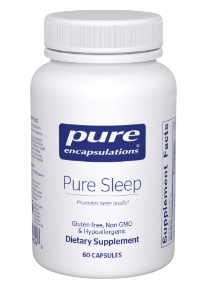
Dosage instructions
- Dosage amount:
2 Capsules
bedtime
Ongoing
Additional notes
"This is a formula, if additional support is needed, to support falling asleep faster, staying asleep longer, and waking up feeling refreshed. "
Lifestyle recommendations
Nutrition
Optimize Evening Intake for Uninterrupted Rest
What goes into the body during the afternoon and evening directly dictates the depth and architecture of sleep overnight. Modifying the timing of stimulants and food supports the body's natural wind-down processes:
Establish an Early Caffeine Cutoff:
Aim to wrap up caffeine consumption by 12:00 PM. Caffeine can remain active in the system for up to 6 hours or longer, blocking the natural sleep-promoting signals that build up throughout the day.
- Alternative: Swap afternoon coffee, energy drinks, or black tea for organic chamomile, rooibos, or refreshing peppermint herbal tea.
Create an Alcohol Buffer Zone:
Allow a window of 3 to 4 hours between the last alcoholic beverage and bedtime. While alcohol can make falling asleep feel easier, it actively fragmentates sleep by blocking restorative REM cycles, causing frequent micro-awakenings, and elevating the overnight heart rate.
- Alternative: Enjoy sparkling water with a splash of unsweetened tart cherry juice (a natural source of melatonin) in a favorite glass as a relaxing evening ritual.
Keep A Three-Hour Fast Before Bed:
Aim to finish the final meal or heavy snack of the day 3 hours before sleep. Digesting a heavy meal raises the body's core temperature and heart rate, diverting energy away from deep cellular repair and physiological restoration.
- Alternative: Enjoy dinner earlier in the evening. If an evening snack is absolutely necessary to prevent waking up hungry, choose a small, easy-to-digest option like a handful of walnuts or a warm mug of bone broth.
- Alternative: Swap afternoon coffee, energy drinks, or black tea for organic chamomile, rooibos, or refreshing peppermint herbal tea.
Movement
Leverage Daily Movement for Restful Sleep
Engaging in physical activity is one of the most effective ways to deepen sleep, but the timing of movement dictates whether it energizes the day or disrupts the night. Aligning physical exertion with the body's natural circadian rhythm supports both daily vitality and evening recovery:
Prioritize Morning or Mid-Day Exercise:
Completing higher-intensity workouts earlier in the day naturally raises core body temperature and cortisol levels when wakefulness is desired. This healthy daytime spike promotes a more dramatic, restorative drop in temperature and stress hormones later in the evening.
- Examples: A morning jog, weight training session, brisk outdoor walk, or an active fitness class before 2:00 PM.
Keep Evening Workouts Low-Impact and Restorative:
Avoid strenuous cardiovascular or heavy resistance training within 3 to 4 hours of bedtime. Late-night high-intensity exercise elevates adrenaline, heart rate, and core body temperature, which can delay the body's transition into a deep sleep state.
- Examples: Swap late-night intense cardio for gentle stretching, restorative yoga, or a peaceful, slow-paced stroll around the neighborhood to wind down the nervous system.
- Examples: A morning jog, weight training session, brisk outdoor walk, or an active fitness class before 2:00 PM.
Sleep
Healthy Sleep Hygiene for Optimal Sleep
Establishing a predictable daily rhythm acts as a powerful cue for your nervous system, allowing your body to transition smoothly into a deeply restorative state. Here are practical ways to optimize your sleep environment and bedtime habits:
Establish a Consistent Sleep-Wake Schedule:
Aim to go to bed and wake up at the same time every day, even on weekends. Keeping this consistent within a 30-minute window trains your brain's natural clock to release sleep-inducing hormones on a reliable schedule.
Create a Restful Sleep Sanctuary:
Keep your sleeping environment dark, quiet, and cool.
- Temperature: Aim for a bedroom temperature between 60°F and 67°F (15°C to 19°C), which mimics the natural drop in body temperature required to initiate deep sleep.
- Light: Use blackout curtains or a comfortable eye mask to eliminate streetlights and early morning sun, signaling your brain to maintain melatonin production.
Establish a Digital Sunset:
Avoid screens (phones, tablets, computers, and televisions) for 1 to 2 hours before bed. Blue light from screens suppresses melatonin release, keeping your brain in a state of alert "daytime" mode.
- Example: Swap late-night scrolling for reading a physical book under warm light, listening to a calming podcast, or dimming the household lights to mimic twilight.
Align with Natural Light Cycles:
Get 10 to 15 minutes of bright, natural sunlight in your eyes within 30 minutes of waking up. Morning light exposure acts as a powerful wakefulness cue, which directly improves how easily your body winds down and produces melatonin approximately 16 hours later.
Stress Management
Incorporate Evening Relaxation Practices:
Dedicating 10 to 15 minutes to wind down before bed acts as a physical bridge to sleep, shifting the nervous system out of "active daytime mode" and into deep recovery.
These accessible practices can be completed right in bed to help ease the transition into sleep:
- Box Breathing (4-4-4-4): Inhale for 4 seconds, hold for 4 seconds, exhale for 4 seconds, and hold empty for 4 seconds. Repeating this cycle for just 5 minutes is highly effective for reducing evening cortisol and steadying the heart rate.
- Progressive Muscle Relaxation (PMR): Starting at the toes, tense each muscle group tightly for 5 seconds, then completely release the tension on a slow exhale, moving progressively up to the calves, thighs, abdomen, and shoulders. This physically releases accumulated daily stress and cues the brain that it is safe to sleep.
- The 4-7-8 Breathing Technique: Inhale quietly through the nose for 4 seconds, hold the breath for 7 seconds, and exhale completely through the mouth making a "whoosh" sound for 8 seconds. This rapid-calming practice acts as a natural tranquilizer for the nervous system, helping to quiet a racing mind.